


MACD in Python calculated from scratch
The algorithm (Multi-Exponential Moving Average Convergence Divergence) developed by J. Ross Cameron and George C. Lapp is a popular technical indicator that is used in various financial markets to analyze the trend and dynamics. In this article we will examine how the MACD values are calculated from scratch using Python.
What is MacD?
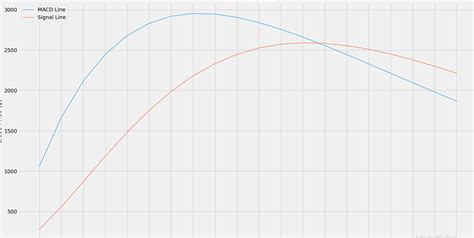
The MACD calculation includes two main components:
- The EMA (exponential sliding average) of the HMA (heavenly proportional moving average)
- The convergence line (C-line)
The formula for calculating MACD can be divided into several steps:
HMA calculation
In order to calculate the HMA, we have to carry out an exponential smoothing calculation for the closing course of the financial value.
`Python
Import nump as an NP
Def HMA (prices, alpha):
"" ""
Calculate the exponential moving average (EMA) of a list of prices.
Parameter:
Prices (list): List of final prices.
Alpha (Float): EMA smoothing factor.
Returns:
List: List of EMA values.
"" ""
n = len (prices)
Hma_values = []
for i within reach (s):
Hma_values.append (alpha prices [i] + (1 - alpha) hma_values [-1])
Return np.array (hma_values)
Def HMA smoothes (prices, alpha, Window_Size):
"" ""
Calculate the exponential sliding average (EMA) of a list of prices using a moving average.
Parameter:
Prices (list): List of final prices.
Alpha (Float): EMA smoothing factor.
Window_Size (Int): Size of the sliding average window.
Returns:
List: List of EMA values.
"" ""
n = len (prices)
Hma_values = hma (prices, alpha)
hma_values = np.convolve (hma_values, np.ones (Window_Size) / Window_Size, mode = 'equal')))
Gives HMA_Values back
MACD calculation
The MACD calculation includes the following steps:
- Calculate the EMA of the HMA.
- Calculate the C line by average the two EMA values.
“ Python
DEF MACD (prices, Window_Size):
“” “”
Calculate the multi-exponential gliding average convergence-diversity algorithm (MACD).
Parameter:
Prices (list): List of final prices.
Window_Size (Int): Size of the MacD signal.
Returns:
List: List of MacD values.
“” “”
Hma_values = hma_smoothed (prices, 3, Window_Size)
Ema smoothed_hma_values = hma_smoothed (hma_values, 12, window_size)
ema_values = ema_smoothed (ema_smoothed_hma_values, 26, Window_Size)
macd_values = []
For i within reach (len (eMa_values) – Wester_Size):
macd_values.append ((ema_values [i] – ema smoothed_hma_values [i]) / ema smoothed_hma_values [i + Window_Size -1])
Return np.array (macd_values)
Def EMA smoothes (prices, alpha, Window_Size):
“” “”
Calculate the exponential sliding average (EMA) of a list of prices using a moving average.
Parameter:
Prices (list): List of final prices.
Alpha (Float): EMA smoothing factor.
Window_Size (Int): Size of the sliding average window.
Returns:
List: List of EMA values.
“” “”
n = len (prices)
Hma_values = hma (prices, alpha)
hma_values = np.convolve (hma_values, np.ones (Window_Size) / Window_Size, mode = ‘equal’)))
hma_values = np.roll (hma_values, -window_size)
Gives HMA_Values back
DEF EMA_SMOOTED (EMA_Values, Alpha, Window_Size):
“” “”
Calculate the exponential sliding average (EMA) of a list of EMA values using a sliding average.
Parameter:
EMA_Values (list): List of EMA values.
Alpha (Float): EMA smoothing factor.
Window_Size (Int): Size of the sliding average window.
Returns:
List: List of the smoothed EMA values.
“” “”
n = len (ema_values)
Hma_values = hma_smoothed (EMA_Values, 3, Window_Size)
Hma_values = np.convolve (hma_values, np.